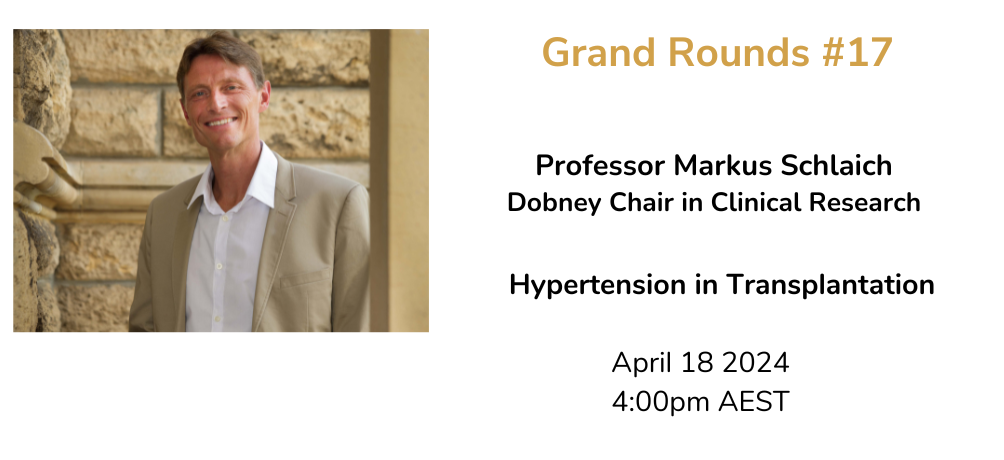
Grand Rounds #17
Register Now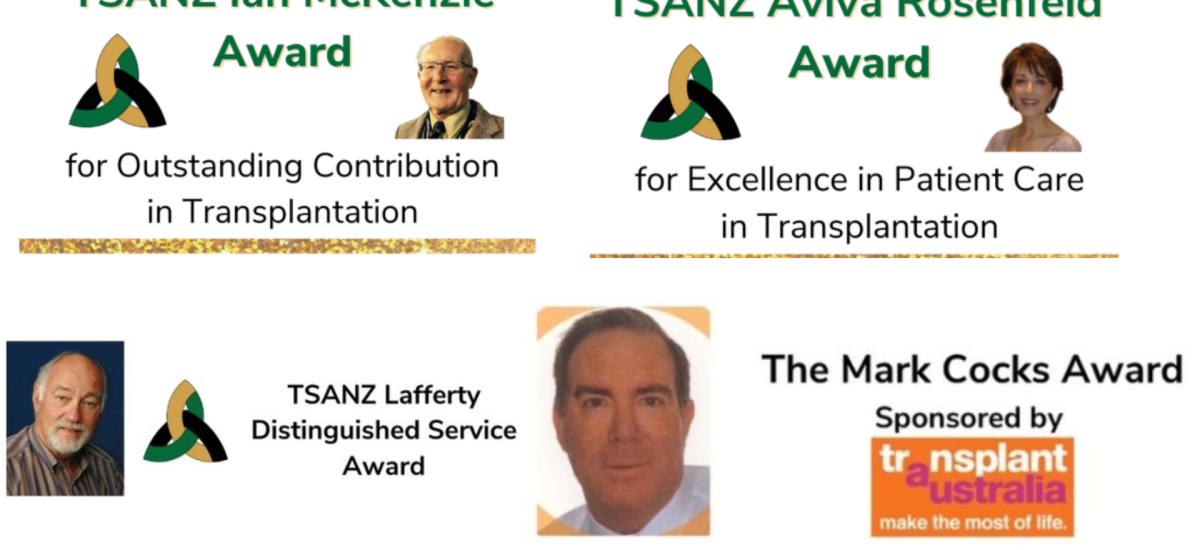
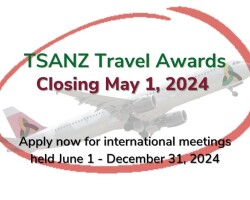
TSANZ AWARDS 2024
Find out more
Register for the ASM 2024
Register Now
New to the line-up for the 2024 TSANZ ASM...
Learn More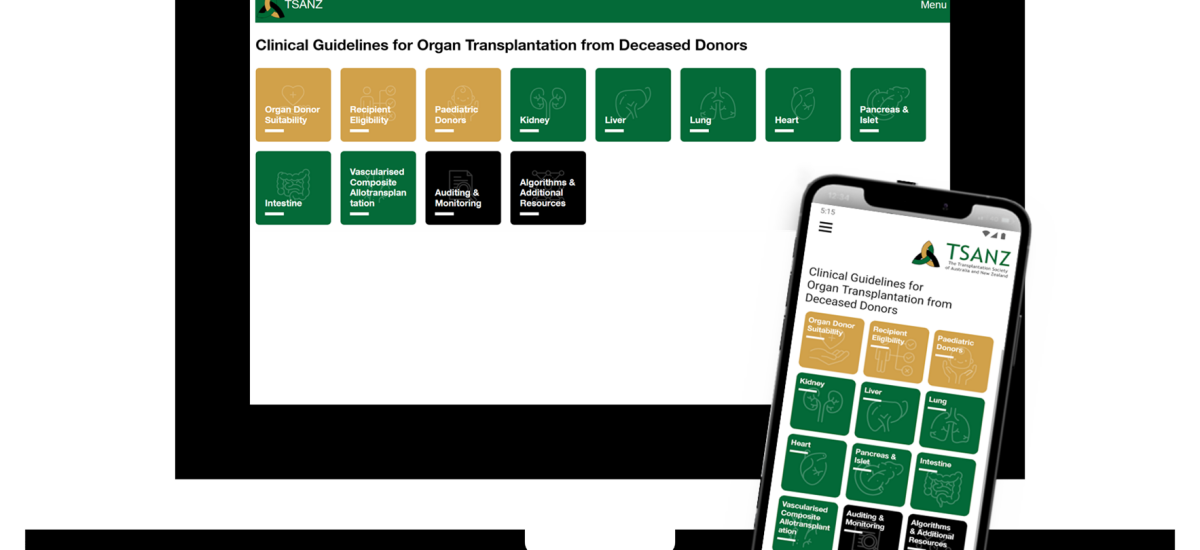
New look for 2024...
View nowWelcome to TSANZ
TSANZ aims to promote research, best clinical practice and advocacy to improve outcomes and increase access to organ transplantation in Australia and New Zealand. The Society brings together transplantation professionals in medicine and science that share common ideals and principles.

Upcoming Events
show all| May 17-22 2024 | American Thoracic Society | details |
| May 23-26 2024 | European Renal Association | details |
| June 1-5 2024 | American Transplant Congress | details |
| June 15 - 18 2024 | TSANZ 42th Annual Scientific Meeting and Associated Meetings | details |
| August 24-28 2024 | 59th ANZSN Annual Scientific Meeting | details |
| August 30 to September 2 2024 | European Society of Cardiology | details |
| September 22-25 2024 | 30th International Congress of the Transplantation Society (TTS) | details |
New Resources
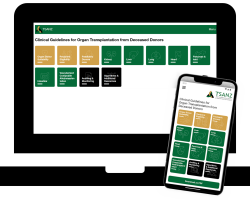
show allUpdated clinical guidelines now available
Access the updated National SOP now
Revised guidance on surgical techniques for retrieval of abdominal organs for transplantation
Revised Standard Operating Procedure for all donation & transplant clinicians.
Updates to Chapters 4, 6 & 8
Review of kidney allocation has been undertaken by RTAC and RAWG.
Principles of the Kidney Matching Algorithms SOP
What do patients and their families think about telehealth in Kidney Transplantation? - Register for online workshops here
Implementing Virtual Cross Matching in Australia
Read the TSANZ Ethical Statement regarding executed prisoners
Follow the link to view the statement
Tweets
show allThe deadliest @Keliyari13 summarizing our Position Statement for endorsement to wrap up an incredible two days of… twitter.com/i/web/status/1…
Register for Grand Rounds #12: A/Prof Bill Mulley and Prof Geoff McCaughan present 'Novel platform to predict and i… twitter.com/i/web/status/1…
Join Dr Stella McGinn and A/Prof Peter Hughes for TSANZ Grand Rounds #11 - Paired kidney exchange program - is it t… twitter.com/i/web/status/1…